|
|
Status
|
Notes
|
|
Needed Improvements
|
March 2014
|
|
|
Side mirrors
|
Done
|
|
|
Air cleaner
|
Done
|
|
|
Tune up
|
Done
|
|
|
Gas cap
|
Done
|
|
|
Tailgate logo letters
|
Done
|
|
|
Side moldings
|
Done
|
|
|
Replace gas filler grommet
|
Done
|
|
|
Detail dash
|
Gauges now
work
|
|
|
Replace rear license bracket
|
Done
|
|
|
Front plate bracket
|
Done
|
Not original,
but functional
|
|
Fix hood hinges and hood fit
|
Done once
|
Springs are
weak and fit is poor
|
|
Deal with driver side armrest
|
Done
|
Both front
armrests renewed
|
|
Detail interior
|
Partial
|
Needs floor
covering
|
|
Clean up engine bay wiring
|
Mostly done
|
|
|
Fix cowl vent; replace gasket
|
Mostly done
|
|
|
Get all lights to work
|
Mostly done
|
No interior
lighting
|
|
Fix tailgate rust; chrome or refinish hinges
|
Needs
repair, soon
|
|
|
Replace weather stripping
|
|
|
|
Detail or repair spare tire well as needed
|
|
|
|
Replace window rubber
|
|
|
|
Fix horn if needed
|
|
Have horn,
needs repair
|
|
Research correct color CA plates and get personalized plates to match
|
|
Maybe
|
|
Wiper arms and blades. Motor and linkage?
|
|
|
|
Clean paint off rear window frame
|
|
|
|
Dash pad
|
|
|
|
Repair windshield frame rust
|
|
|
|
Front carpet or floor mat
|
|
|
|
Rear bumper brackets
|
|
|
|
Fix heater (might need core)
|
|
|
|
Repair radio or new radio
|
|
|
|
(Maybe) repaint
|
|
|
|
Replace visor
|
|
Rust in roof
frame must be repaired first
|
|
Discoveries
|
|
|
|
PS unit
required rebuild
|
Done
|
|
|
Brake cylinders
leak
|
Rebuilt
|
Master and all slaves
|
|
Install
included wire wheel covers
|
Do not fit; made for some other car
|
Sell on eBay
|
|
Carburetor didn’t work
|
Rebuilt
|
|
|
New points, cap, rotor don’t fit
|
Not an issue.
|
Engine has been
swapped. Has 330 ci Firedome from a 56 S-23
|
|
No plug wire covers
|
Done
|
Found new ones and
decals
|
|
Lost “S” from hood
|
Done
|
Found another
|
|
Transmission doesn’t downshift
|
Fixed
|
Control circuit
winding missing
|
|
Turn signals, brake lights don’t work
|
Done
|
Mostly bad grounds
|
|
Tires leak
|
Done
|
Bad bead seal
against rusty wheels
|
|
Exhaust leak
|
Done
|
New flange gaskets
|
|
Idles too fast
|
Disabled choke
|
Pugged vacuum leak
on bojack pipe to manifold
|
|
Electrical short makes ammeter twitch
|
Fixed
|
Stoplight switch
wires had draped across the exhaust pipe and shorted
|
|
Fails to crank
|
Fixed
|
Replaced ignition
switch; taped bare wires in dash
|
|
Weak battery
|
Done
|
Replaced
|
|
Engine wouldn’t run
|
Done
|
Changed fuel pump.
Tried three fuel filters. Boiled out
and lined fuel tank.
|
|
Gas gauge doesn’t work
|
Done
|
New sending unit,
adapted for the wagon’s weird tank
|
|
Temp sender not connected
|
“Done”
|
Jury-rigged. Car’s
sending unit won’t fit 330 engine.
|
|
Wiper towers missing
|
Done
|
Found replacements
in South Dakota
|
|
Battery tray rusted through
|
||
|
Grill and bumper rechrome is rough
|
||
|
No kick-panels
|
||
|
Heater controls are very stiff.
|
||
|
Cowl vent is dirty, leaky, and hard to close.
|
|
|
|
Options
|
January 2013
|
March 2014 outlook
|
|
Swap tires, maybe
wheels,
|
|
Probably not
|
|
Improve stance
|
In work
|
New front springs in hand
|
|
New shocks
|
|
Not needed
|
|
New upholstery,
or new seats
|
Probably not
|
|
|
Seat belts
|
Rear added
|
Need front
installed
|
|
Repair and chrome rear bumper
|
||
|
Refinish or replace steering column
|
|
Might
repaint
|
|
12V conversion
|
|
Probably
not
|
|
Hop-up existing engine
|
Probably
not
|
|
|
Manifold and carb
|
Have 4V
setup
|
Probably
won’t install
|
|
Cam
|
|
Probably
not
|
|
Distributor and ignition
|
Tuned up
|
Ok
|
|
Swap engine
|
|
Probably
not
|
Sunday, March 9, 2014
Progress Report [John]
Here's an approximate summary of where we are in making the Firedome Estate Wagon functional and handsome. The table shows our initial inventory of needs, far from complete as it turns out. The next section tabulates the additional issues we have found so far, and the last section lists improvements we thought we might want to make.

February - March 2014 [John]
It runs!
After we got the transmission to shift, we took the car back to the carb expert. He quickly noticed that the pipe from the exhaust manifold warmer to the choke was loose and leaky. After he removed the defective pipe, capped the choke fitting and tweaked the idle mixture, he set the idle to a nice low speed, probably near the recommended 475-500 rpm. The car now drives and shifts fine. No longer stalls at stops, upshifts when you lift your foot off the gas and downshifts somewhere below 8 mph. Only thing missing was a kick-down switch from the '56 carburetor. By 1956, Desoto was using the Powerflite transmission, a real automatic, and it didn't need the electrical kick-down switch the M6 Tiptoe Shift transmission required. We hid a horn button under the dashboard and connected it to the transmission governor. Now a touch of the button shifts from 4th to 3rd or from 2nd to 1st. I think we are done with the transmission and controls.
An increasingly noisy exhaust was traced to leaking (blown, actually) gaskets on either side of the exhaust heat riser valve. Small-block Chevy gaskets fit. I noted the vane inside the valve is welded into the open position, making it function-free, but the valve serves as a useful spacer, since the exhaust down pipe has been fitted with the valve in place. Much quieter now, just a low rumble from the stainless, two-into-one muffler that was already on the car when we got it.
It's prettier!
Bought and received the missing side moldings we had located some time ago. They are now installed, giving the car a much more completed look. There is a little pitting on the chrome, and we had to drill out the stripped quarter-inch lugs to 5/16 and tap them, but the result is great.
 |
| New rear fender moldings match the car well |
We painted the unused plug wire covers we found some time ago, and installed new decal lettering on them. Makes the valve covers look like they need to be stripped and refinished. Someday maybe.
 |
| No more unsightly plug wires! |
Next:
- We ordered and received new coil springs for the front suspension. We'll have a shop replace the old ones and then evaluate whether any additional work is needed on the rear.
- We were advised to replace the original steel fuel line that runs the length of the car. It's probably obstructed, judging from the condition the gas tank was in.
- The rusty tailgate hinge mounts have deteriorated to the point we have to address them soon. A recommended body shop agreed to fix the tailgate, but can't get to it for a few weeks. Once in the body shop, we'll need to decide what other body issues to address -- there are other areas with rust. The driver's side visor is detached, and on inspection it's clear that the roof reinforcing panel it should attach to is rusted and gone. Fixing this will likely destroy the original headliner front section. To be decided. There are also rust bubbles around parts of the windshield and on some of the doors. We also found some approximate fender straightening that prevents the trim from fitting correctly.
 |
| Tailgate hinges attach to the skin, which is very weak. There is worse rust inside from sloppy repairs done year ago. Hinges were chrome plated when new. |
Saturday, February 15, 2014
Valentines Day Update [John]
Parts found
Found a salvage yard in South Dakota that had some of the stuff we need, parts I wasn't sure we could ever find. We got and installed used letters for the tail gate,
 |
| All in decent shape, not perfect, but suitable for this car. |
the missing S for the hood,
 |
| New S matches perfectly. All letters are now fastened down. |

Most glaring need for parts now is the rear fender moldings that we've never had with this car.
First steps on interior
Some of the seams on the front seat had come unstitched and stuffing was starting to pull out. Resurrection Upholstery, a local shop, pulled the cover off and repaired it with new stitching and backing material. Nice shape for its age, but it is pretty old. Also had the front armrests rebuilt and recovered.

![]()
To fasten letters to the tailgate we took it apart. It has been repaired, a bit crudely, but seems structurally OK now. It had clearly been rusty. There are still visible rust stains around the hinges, so we will probably revisit this later. Cleaned up the renewed wood paneling in the rear compartment and replaced several missing or rusty screws. There is a bolt shop just down the hill from here (Ababa Bolt) that has had every stainless screw we have gone looking for. Might have to buy 40 or 100, but they have them. We will be back.
To fasten letters to the tailgate we took it apart. It has been repaired, a bit crudely, but seems structurally OK now. It had clearly been rusty. There are still visible rust stains around the hinges, so we will probably revisit this later. Cleaned up the renewed wood paneling in the rear compartment and replaced several missing or rusty screws. There is a bolt shop just down the hill from here (Ababa Bolt) that has had every stainless screw we have gone looking for. Might have to buy 40 or 100, but they have them. We will be back.
Making it run
When I last posted, the engine had left us stranded a few times when warm. The battery was new, and on one occasion of no cranking, light jumper wires from the main battery junction block to the coil and a nasty, untaped joint in the cranking wire started the car. A new ignition switch arrived, and when we replaced the old one, we replaced or repaired all the old wires that serve it. That seems to have resolved the failure to start.
Finally got around to installing the new spark plug wires, insulators. and distributor cap. The rotor looked new, and besides, CarQuest didn't have it in stock. We've had these parts for months. The wires came in assorted lengths, and we eventually figured out where to put them to get a neat installation. No cutting at all, but we did have to assemble the insulators and the terminals for the distributor cap.
 |
| Neat, and easy enough -- once you get them matched up. |
Phil found and bought Firedome plug wire covers, but we haven't painted them yet, so installing them will wait. Maybe we ought to refinish the the valve covers to match. The plug-tube gaskets around each tube are hard and brittle, so we plan to replace them.
We checked the agreement of wires to distributor cap towers with firing order three times, just to make sure we had it right. Dwell measured 33 degrees, close enough, I decided. When we fired the engine up, it ran like new. Runs smooth, idles, fast response to a throttle blip. Why didn't we do this sooner? The old wires were either misconnected or several were broken. I think at least two cylinders must not have been firing at all. The car now cruises up the hilly streets in our neighborhood and accelerates smartly at freeway speeds. Be nice if it had a higher gear though -- I think its rear end would be perfect for 50 mph gravel roads. We don't drive on those much in San Diego. This engine work was all done last weekend.
Now, about that transmission
Today we got out the shop manual and began diagnostics on the M6 Tip-Toe Shift semiautomatic. The M6 is a four-speed, with two manually selected driving ranges (L and D). Each driving range has an under drive via a countershaft in the main box and a direct drive. The driver selects the driving range with the gear lever, depressing the manual clutch whenever the lever is moved, and an electrical - mechanical - hydraulic system shifts between first and second if in L and between third and fourth if in D. Theoretically.
On this car, upshifts of 1 to 2 and 3 to 4 seemed to work normally. But down shifts were very rare. The driver instructions note that you can drive all day in D, letting the control system select third or fourth as needed. But not on ours. It almost never downshifted at full stops, let alone when speed dropped below 10 mph. Starting out in fourth is disappointing.
The shop manual tells you in a dozen simple steps how to diagnose any M6 difficulty. We used a voltmeter instead of the insulated test lamp it calls for. The problem turned out to be fairly simple: there was no power being supplied to the control elements (solenoid, governor, interrupt switch) and what wiring there was was damaged and incorrectly connected. In a couple of hours, Phil and I made up the wiring harness we needed and ran the checks.
 |
| The little box at the coil contains a 20A circuit breaker (top) and a 10 Ohm resistor (bottom). Current from the BAT terminal on the coil supplies power to the control devices on the transmission through the circuit breaker. One of these, the interrupter switch, momentarily shorts the DIST side of the coil though the resistor, killing engine ignition during automatic gear change. We found none of this connected. |
At the transmission, power from the circuit breaker arrives at one terminal on the solenoid. The other is connected to the single terminal on the governor. There are also leads to an interrupter switch under the right-most round cover in this photo.
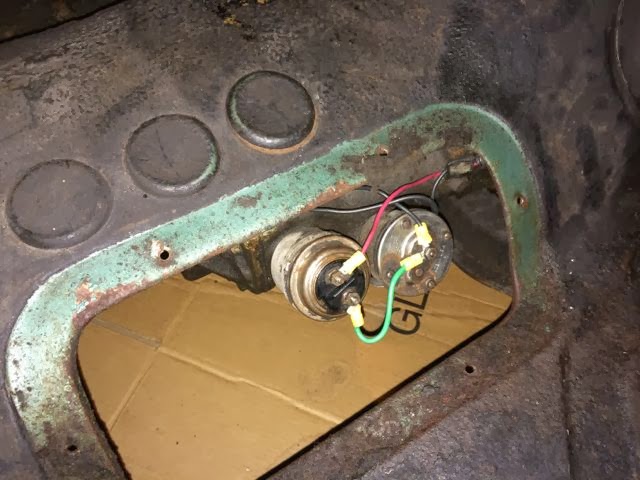 |
| If engine speed is decreasing from 15 to 8 mph, internal points on the governor close, grounding one side of the solenoid (on the left). This energizes it, it opens a ball valve, causing oil pressure on the shifting piston to fall. The shifting fork moves rearward, shifting the gear set to 1 or 3, depending on whether driving range L or D is selected. When the fork moves, it activates the interrupter switch, killing engine power briefly to ease the shift. None of this was correctly wired, but it is now.
The checks indicated everything was as it should be, except that this '56 engine lacks a kick-down switch and an anti-stall device on the carburetor. Driving it confirmed that it all works as it should. As a bonus, we were able to show that if you connect a test lead to the governor's single terminal, and you ground the other end of the lead while in second or fourth, the transmission instantly downshifts to first or third. I think we might add a push-button switch on the dash to force this kick-down on the relatively rare occasions it might be needed.
So, how's it look?
Given the improved engine performance and the functioning transmission, I think we should forget about motor or transmission swaps. We need a few days to think about what's next.
|
Subscribe to:
Posts (Atom)